
Flight Path: The History of Ski Jumping in Canada
Ski jumping in Canada is not just a story of hills and jumps—it’s a story of pioneers, resilience, and rising again. From humble beginnings in the Rocky Mountains to making history on the Olympic podium, Canadian ski jumping has endured, adapted, and is now soaring.
Early Roots: From Scandinavian Immigrants to Canadian Hills
The sport of ski jumping was born in Norway in the mid-1800s and soon made its way across the Atlantic. When Scandinavian immigrants arrived in western Canada in the late 1800s, they carried with them skis—and the idea of flying down a ramp into the air.
One of the earliest hubs was near Revelstoke, British Columbia. The Nels Nelsen Hill (also known as “Big Hill”) was operational from 1916 and saw world-record leaps, making it the only Canadian hill to host official world-length records. These early decades built a foundation of local clubs, national championships, and a culture of ski jumping within the Canadian winter landscape.
Growth, Challenge, and Mid-Century Transition
By the 1920s and 1930s, ski jumping had taken root across Canada—in British Columbia, the Prairies, and eastern regions like Ottawa. But the sport also faced challenges: limited infrastructure, competition from other winter sports, and fluctuating funding.
Despite these hurdles, Canada produced standout athletes. Horst Bulau, from Ontario, was one of the world’s best in the 1980s, earning 13 World Cup victories and a seventh-place finish at the 1988 Calgary Olympics—the best Olympic result ever for a Canadian ski jumper. Steve Collins of Thunder Bay also made history, winning the 1980 Junior World Championship and helping reignite national attention in the sport.
Calgary 1988: A Home-Soil Spotlight
When Canada hosted the 1988 Winter Olympics in Calgary, ski jumping had a rare moment in the national spotlight. The event showcased Canadian athletes and organizers alike, demonstrating the country’s capability to host elite competition. Horst Bulau’s performance on home soil inspired a generation and reaffirmed that Canada could compete with the world’s best. However, it also highlighted the need for stronger long-term development and infrastructure to sustain success.
Recent Resurgence and Breakthrough Success
Fast forward to the 2010s and beyond, and Canadian ski jumping began to rise again. The combination of young talent, global training opportunities, and renewed organizational focus has created a new era for the sport.
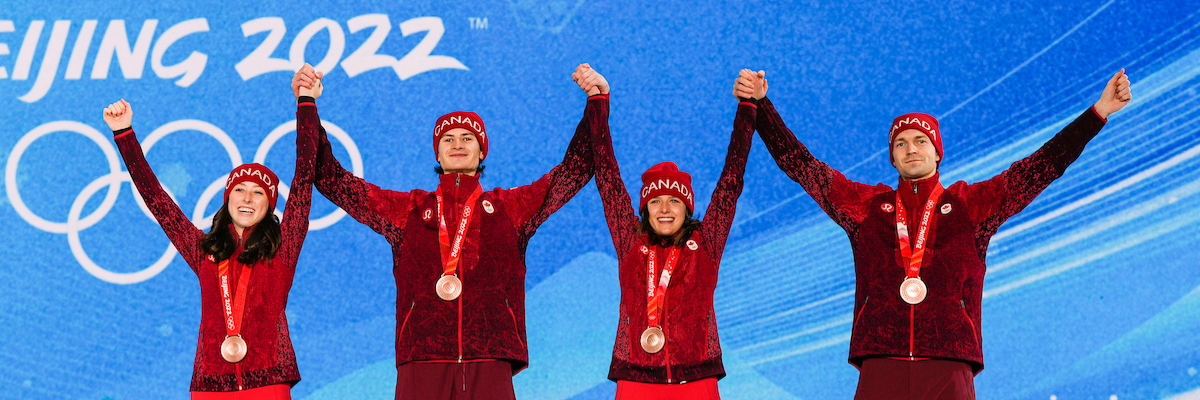
At the 2022 Winter Olympics in Beijing, Canada captured its first-ever Olympic ski jumping medal—a bronze in the inaugural mixed team event. The historic lineup included Alexandria Loutitt, Abigail Strate, Mackenzie Boyd-Clowes, and Matthew Soukup.
In 2023, Alexandria Loutitt became the first Canadian woman to win a FIS World Cup event and later the first Canadian ski jumper to win a World Championship title.
Why This Matters—and What Comes Next
The history of ski jumping in Canada proves that the nation has always had the talent and the spirit—it’s now about building sustainability. The early pioneers gave us passion. The generations that followed proved Canadians could compete with the best. And today’s athletes are turning potential into podiums.
Ski Jumping Canada is focused on the future: developing youth programs, expanding access to facilities, creating clear athlete pathways, and fostering the next generation of Canadian jumpers. The momentum is real, and the mission is clear—build depth, grow the sport, and make flight a national tradition once again.
From the Big Hill in Revelstoke to the world’s biggest stages, Canadian ski jumping has always been about courage, innovation, and the belief that we can soar. With every record, every medal, and every new jumper taking their first flight, the story continues.
The next chapter is ours to write, and Canada is ready to fly higher than ever.
Help us lift Canadian ski jumping to new heights. Are you ready to take flight?
